NYC Neighborhoods: Nine Worth Visiting
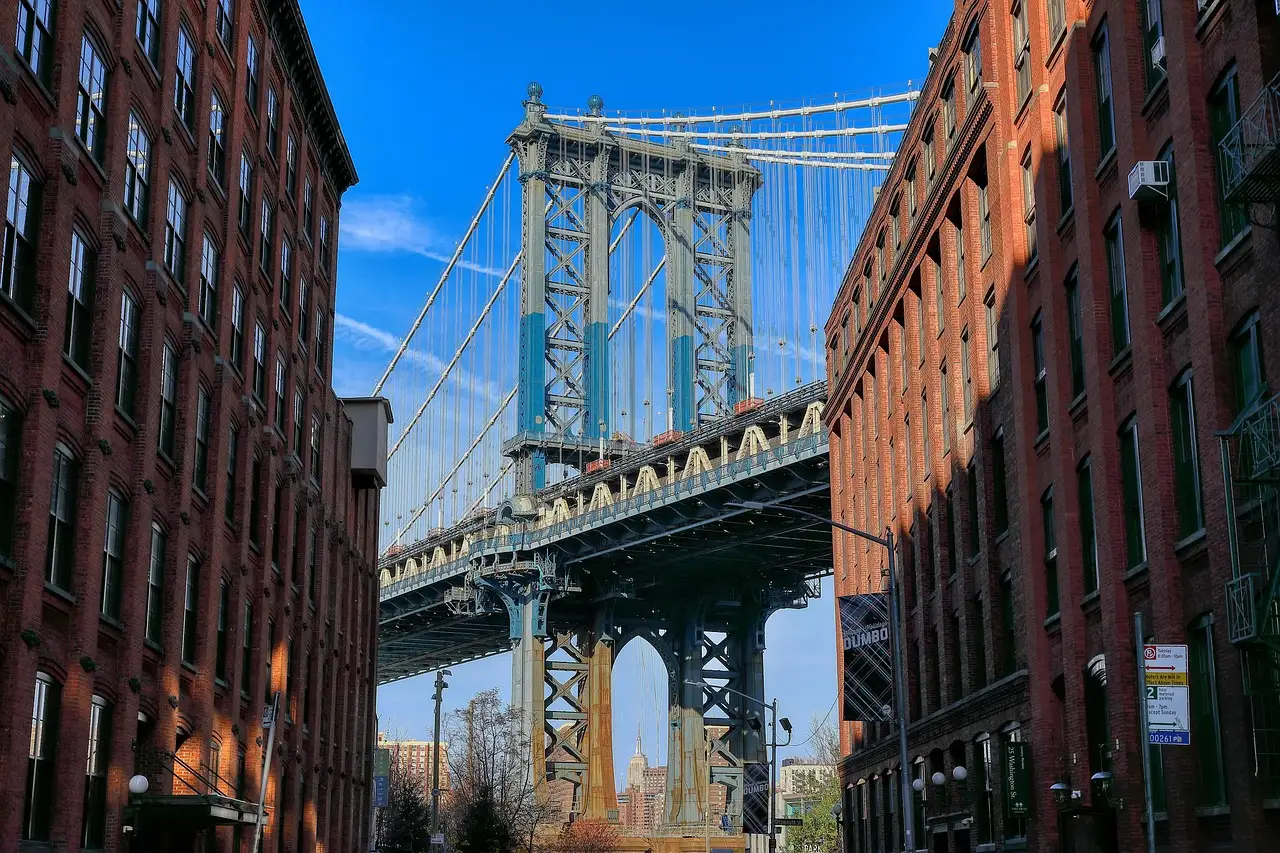
Nine NYC neighborhoods are worth a first-time visitor's time: Midtown, Lower Manhattan, Greenwich Village, SoHo, Chinatown and Little Italy, Harlem, the Upper West Side, Williamsburg and DUMBO. For a first trip, the best picks are Midtown for landmarks, Lower Manhattan for history, and Greenwich Village or DUMBO for walking. You do not need all nine. Pick three or four, give each a half day, and the list below tells you what to see, which subway stops are closest and who each place suits.
Each entry below says what you will see, which subway stops are closest and who the neighborhood suits. Guided walks of places like Greenwich Village are listed in our city tours guide, but you can do all nine on your own with a tap-to-pay card or phone. The city's tourism board describes hundreds of communities across five boroughs, so this list is a short one on purpose.
1. Midtown: best for famous landmarks on a first night
Midtown suits first-time visitors who want the best-known landmarks close together. According to the tourism board's Midtown page, the area holds Times Square, Broadway, Rockefeller Center and St. Patrick's Cathedral, plus the shops of Fifth and Madison Avenues. Times Square is loud, bright and busy at all hours.
Times Sq-42 St has the 1, 2, 3, 7, N, Q, R, W and S trains. Rockefeller Center has the B, D, F and M at 47-50 Sts, and Grand Central has the 4, 5, 6 and 7. Those station lists come from the MTA's subway station data.
Come for an evening of lights and a show, then move on. You do not have to sleep here to see it. For tickets and venues, see our Broadway ticket guide.
2. Lower Manhattan: best for history and the 9/11 Memorial
Lower Manhattan is where New York City began in the 1600s, and it is the best choice for history and for the Statue of Liberty ferries. NYC Tourism points to historic parks, museums, a famous skyline and the tallest observation deck in the Western Hemisphere. The 9/11 Memorial plaza is free and open daily from 8 a.m. to 8 p.m. The museum next to it charges admission.
The Statue of Liberty ferries leave from Battery Park, and you can read how that works in our Statue of Liberty guide. For the subway, use the 1 train to South Ferry or WTC Cortlandt, the 4 and 5 to Bowling Green, or the 4, 5 and 6 to Brooklyn Bridge-City Hall. Fulton Street links the 2, 3, 4, 5, A, C, J and Z.
To sleep here, the Artezen Hotel sits on John Street in the Financial District, about 1.2 km from the 9/11 Memorial and Museum. Plan on a full morning for the memorial and a second block of time for the harbor.
3. Greenwich Village: best for walking, jazz and food
Greenwich Village is the best neighborhood for a relaxed walk, live music and small restaurants. NYC Tourism calls Washington Square Park the heart of the Village and describes a laid-back, youthful and upbeat feel. The streets around the park echo with poetry and music history.
Take the A, B, C, D, E, F or M to W 4 St-Wash Sq, or the 1 to Christopher St. The Village Vanguard is a jazz club here with shows at 8:00 p.m. and 10:00 p.m. It sells tickets in advance and adds a one-drink minimum, and guests must be 15 or older.
A good New York day stays inside one or two neighborhoods and leaves time to walk.
The Greenwich Village food tour from €90 per person is a three-hour tasting walk run by Secret Food Tours. The meeting point is 323 6th Ave, and the price includes a bagel, falafel, a pizza slice, a cookie and a cupcake. The listing says it is not suitable for wheelchair users or people with mobility impairments. GetYourGuide shows a 4.9 rating from 116 reviews. It suits hungry walkers who like a slow pace and does not suit anyone who wants to skip the food.
Pro Tip The 1 train stops in Lower Manhattan, at Canal Street, at Christopher Street in the Village, at Times Square, on the Upper West Side and at 125th Street in Harlem, so one line links six of the nine neighborhoods.
4. SoHo: best for shopping, architecture and a short stop
SoHo is the best neighborhood for shopping and for a short walk past galleries and boutiques. Its name stands for South of Houston Street. In its SoHo guide, the tourism board says the arty neighborhood of the 1970s and 1980s is now one of the city's prime shopping districts, with high-end galleries, luxury boutiques and independent-designer shops.
Prince St has the R and W. Spring St has the C and E, and the 6 stops there too. Broadway-Lafayette St has the B, D, F and M. Without a shopping plan, SoHo works best as one stop inside a longer walk.
The SoHo, Little Italy and Chinatown walking tour from €25 per person covers all three neighborhoods in two hours. The page says ExperienceNYC runs it, groups hold up to 15 people and the meeting point is Warren St and Broadway. Food and drinks are not included, so budget extra for lunch. You make your own way to the meeting point, and the walk lasts two hours. Its rating on GetYourGuide is 4.8 from more than 800 reviews.
5. Chinatown and Little Italy: best for food and old immigrant streets
Chinatown and Little Italy sit side by side and suit anyone who wants to explore a neighborhood by eating. The city's Chinatown page calls Manhattan's Chinatown busy and evocative, with narrow streets full of restaurants, bakeries, shops and sidewalk vendors. Little Italy took shape when Italian immigrants arrived in the late 1800s. Di Palo's cheese shop and Ferrara Bakery & Café, known for cannoli and espresso, still operate there. The Feast of San Gennaro fills the streets every September.
Canal St is the main stop. The 6, N, Q, R, W, J, Z, A, C, E and 1 trains all stop at stations with that name. For Little Italy, the 6 also stops at Spring St.
Eating is the easiest way in, and our guide to New York City food tours compares the tastings on offer. Arrive hungry and keep a plan for the walk back, because the streets are narrow and crowded at midday.
6. Harlem: best for music, history and a Sunday church service
Harlem is the best neighborhood for music, Black cultural history and a Sunday gospel service. On its Harlem page, the tourism board says the area has been synonymous with Black culture since the Harlem Renaissance, an early 20th-century boom in music, literature, dance and art. It suggests taking the A train and others uptown. At 125th Street, the A, B, C, D, 1, 2, 3, 4, 5 and 6 all stop at stations with that name.
Abyssinian Baptist Church holds Sunday worship at 10:00 a.m. at 132 Odell Clark Place. The church says to come as you are, and visitors can tell the church ahead that they are coming. Services are also livestreamed. Visit as a guest of the service, and not as a photo stop.
The West Harlem gospel church service and walking tour from €27 per person lasts two hours and is run by Harlem One Stop Cultural Tours. It meets at 700 St Nicholas Ave, and its GetYourGuide rating is 4.4 from 472 reviews. Tips and food and drinks are not included, and the listing gives no group size, so ask the operator before you book. The walk is two hours and you get yourself to the meeting point. To sleep uptown, The Harlem Flophouse is a guesthouse in a private residence on West 123rd Street, with a shared lounge.
7. Upper West Side: best for museums, brunch and Central Park
The Upper West Side is the best neighborhood for the American Museum of Natural History, Lincoln Center and a slow brunch. The official guide describes it as bordered by Central Park and Riverside Park, lined with residential buildings familiar from movies and TV. It also names the museum, Lincoln Center and the area's brunch and appetizing shops among its draws.
Central Park runs from 59th Street to 110th Street, with the Upper West Side along its west edge, according to the Central Park Conservancy. Our guide to New York museums covers tickets for the big ones. The 1, 2, 3, B and C stop at 72 St. The B and C stop at 81 St-Museum of Natural History, and the B runs on weekdays only.
For a bed here, The Wallace Hotel is a 5-star hotel on West 76th Street, about 1 km from Lincoln Center. Families and museum fans will like this part of town most.
8. Williamsburg: best for nightlife, shops and Saturday food stalls
Williamsburg is the best Brooklyn neighborhood for nightlife, indie shops and a casual meal by the river. According to the official guide, it still has a hipster vibe, with indie music, gallery shows, artisan shops and local distilleries and wineries. Smorgasburg, a food market, fills the riverfront on summer Saturdays. If you want food and nightlife in one trip, pick two places: Chinatown and Little Italy for the food, and Williamsburg for the night. No official source names one neighborhood that is best for both. The tourism board calls Williamsburg "one of the City's most exciting nightlife neighborhoods" and lists restaurants there too, but it describes Chinatown's streets as full of restaurants, bakeries and sidewalk vendors, so Chinatown is the stronger pick when food comes first. Williamsburg is the stronger pick when the evening matters more than the meal. In short, Williamsburg is the best single pick for food and nightlife together, while Chinatown is the better pick when the meal is the main event. If you want one neighborhood for both, Williamsburg is the closest, because the board's page lists "many of NYC's trendiest restaurants and clubs" there, including Desert 5 Spot, which offers daily live performances, Mable's Smokehouse for barbecue and Kent Ale House, a relaxed neighborhood pub.
The L train stops at Bedford Av and Lorimer St. The J, M and Z stop at Marcy Av, and the M and J also stop at Lorimer St. Outside summer there is no Smorgasburg, so plan the day around the shops and the evening.
Penny Williamsburg is a hotel on North 8th Street with a restaurant, a bar, a terrace and free bikes. Williamsburg suits couples and friends more than families with small children.
9. DUMBO: best for skyline views and the Brooklyn Bridge
DUMBO is the best neighborhood for skyline views, cobblestone streets and a walk across the Brooklyn Bridge. Its name means Down Under the Manhattan Bridge Overpass. NYC Tourism lists cobblestones, dramatic architecture, dining and views across the river. It adds that the area specializes in contemporary art, with gallery hopping on the first Thursday of each month.
The Brooklyn Bridge is about 1.1 miles across and free to walk, says Brooklyn Bridge Park. On the Manhattan side, cross Centre Street near Brooklyn Bridge-City Hall, where the 4, 5 and 6 stop. The park itself is free and open from 6 a.m. to 1 a.m. every day. NYC DOT lists a rehabilitation of the towers and approach arches and gives no closure dates. Our Brooklyn Bridge walk guide covers the crossing step by step.
To reach DUMBO by subway, take the F to York St or the A and C to High St. Clark St, with the 2 and 3, is the stop for Brooklyn Heights next door. The Brooklyn Heights and DUMBO food tour from €52 per person lasts three hours and is run by Intrepid Urban Adventures. The meeting point is 100 Henry St, and the price includes a tasting at Time Out Market and a visit to the bridge. Drinks and tips are not included. GetYourGuide shows a 4.8 rating from 117 reviews.
How to choose among NYC neighborhoods
The right NYC neighborhoods for you depend on what you came for, and the table below matches goals to places.
| Neighborhood | Best for | Subway stops to use |
|---|---|---|
| Midtown | Landmarks and shows | Times Sq-42 St, Grand Central |
| Lower Manhattan | History, 9/11 Memorial, ferries | South Ferry, WTC Cortlandt, Fulton St |
| Greenwich Village | Walking, jazz, food | W 4 St-Wash Sq, Christopher St |
| SoHo | Shopping, architecture | Prince St, Spring St |
| Chinatown and Little Italy | Eating | Canal St, Spring St |
| Harlem | Music, church services | 125 St |
| Upper West Side | Museums, Central Park | 72 St, 81 St |
| Williamsburg | Nightlife, shops | Bedford Av, Lorimer St |
| DUMBO | Views, the bridge | York St, High St |
Do it on your own first. A subway ride costs $3, tap-to-pay riders pay no more than $35 in 7 days according to the MTA, and every neighborhood above is free to walk. A guide earns its price where the story or the food is the point, such as the Village, Chinatown, Little Italy or Brooklyn Heights. Our getting around NYC guide explains fares and the weekly cap. For everyday local life, Greenwich Village and DUMBO are the best streets to wander, but the official pages do not describe daily local life as such, so the pick below rests on how the tourism board words each place. The nearest official facts: the tourism board calls Greenwich Village laid-back and youthful and describes the Upper West Side as lined with residential buildings, so those two feel most like places where people live. Williamsburg is a third choice: its page mentions shops run by local artisans and a neighborhood pub, though it too is written for visitors. On cost, walking all of it yourself takes one $3 ride per leg and a half day per area, while the walks in this guide run from €25 for two hours to €90 for three, so a tour makes sense for one or two areas, not all nine. A walk also fixes your start time and meeting point, while on your own you can leave when you are tired, which is why the guide is best kept for the food and story stops. Here is what you get for the money: €25 buys a two-hour SoHo, Little Italy and Chinatown walk with a live English guide and no food, €27 buys the two-hour Harlem walk with a gospel service, €52 buys three hours in Brooklyn Heights and DUMBO with a Time Out Market tasting, and €90 buys three hours in the Village with five tastings. For everyday local life, the official pages give no direct answer, so the nearest fact is the board's wording: Greenwich Village, the Upper West Side and Williamsburg read as places where people live, and Greenwich Village is the first to walk. For the walking pick, Greenwich Village suits readers who like small restaurants and a slow pace, and DUMBO suits readers who want views and a bridge walk.
Things to Do in NYC's count of GetYourGuide listings in October 2026 found 82 guided or private tours that name a New York neighborhood such as Harlem, SoHo or Chinatown in their title.
Key Takeaway Three neighborhoods cover most first-visit goals: Midtown for landmarks, Lower Manhattan for history and the 9/11 Memorial, and Greenwich Village or DUMBO for streets to wander.
No official source ranks neighborhoods by safety or price, and there is no official list of the top ten neighborhoods either, so this guide does not rank them. The NYPD posts crime statistics by borough and precinct on nyc.gov, with 78 precincts and weekly updates. Look up the precinct around your hotel if you want numbers.
Sleep where your first two days begin. Our guide to where to stay in NYC compares the areas. Most of the hotels above sit within a short subway ride of the sights.
Add a guide to the neighborhoods you pick
These four walks cover SoHo, Little Italy, Chinatown, Greenwich Village, Brooklyn Heights, DUMBO and West Harlem. Prices run from €25 for a two-hour walk to €90 for a three-hour food tour, and all four offer free cancellation. Doing it yourself costs only a $3 subway ride, and with tap-to-pay the MTA stops charging at $35 in 7 days. You set the pace, but you get no story and no tasting plan. A tour costs more and fixes your start time, yet a guide gives you the history and the food stops, so go on your own first and book a guide for the one or two areas where the food or the story is the point. Ratings run from 4.4 to 4.9 on GetYourGuide, and each walk meets at a set street address, so check the meeting point before you book: Warren St and Broadway for the SoHo walk, 323 6th Ave for the Village food tour, 100 Henry St for the Brooklyn Heights and DUMBO tour and 700 St Nicholas Ave for the Harlem walk. The SoHo and Harlem walks last two hours and the two food tours last three. The SoHo walk suits readers short on time, the two food walks suit hungry readers, and the Harlem walk suits readers who want a Sunday service. The Village food tour does not suit wheelchair users. On the two-hour walks you pay about €12 to €14 an hour, and on the food tours about €17 to €30 an hour, so a guide is worth it where you want the tastings and the story. Group size is capped at 15 on the SoHo walk and is not stated for the others. Food and drinks are not included on the SoHo walk, tips and food and drinks are not included on the Harlem walk, and drinks and tips are not included on the DUMBO tour. The Village food tour is the one that includes tastings in its price, a bagel, falafel, a pizza slice, a cookie and a cupcake. Nobody picks you up, so you travel to each meeting point on your own. In short, the prices are €25 for the SoHo walk, €27 for the Harlem walk, €52 for the Brooklyn Heights and DUMBO food tour and €90 for the Village food tour. The Harlem walk includes the gospel service in its title, and the DUMBO tour includes a tasting at Time Out Market and a visit to the bridge. So is a tour worth it? For Midtown, Lower Manhattan and the Upper West Side, walk on your own for the price of a $3 ride. For the Village, Chinatown, Little Italy and Brooklyn Heights, pay for a guide, because the food and the stories are what a map cannot give you. The group size is not published for the Village, DUMBO and Harlem walks, so ask the operator before you book if you want a small group.
-
SoHo, Little Italy and Chinatown walking tour
from €25 per person
A two-hour downtown walk through three neighborhoods with a live English guide, for readers short on time.
2 hours 4.8 (824 reviews) Free cancellation
Run by ExperienceNYC
Check availability: SoHo, Little Italy and Chinatown walking tour on GetYourGuide -
Greenwich Village food tour
from €90 per person
A three-hour tasting walk through the Village, for readers who want to explore it by eating.
3 hours 4.9 (116 reviews) Free cancellation
Run by Secret Food Tours · not suitable for people with mobility impairments, wheelchair users
Check availability: Greenwich Village food tour on GetYourGuide -
Brooklyn Heights and DUMBO food tour
from €52 per person
A three-hour food walk that ends with the Brooklyn Bridge, for readers who want Brooklyn with a guide.
3 hours 4.8 (117 reviews) Free cancellation
Run by Intrepid Urban Adventures
Check availability: Brooklyn Heights and DUMBO food tour on GetYourGuide -
West Harlem gospel church service and walking tour
from €27 per person
A two-hour Sunday walk with a gospel service, for readers who want Harlem with a local guide.
2 hours 4.4 (472 reviews) Free cancellation
Run by Harlem One Stop Cultural Tours
Check availability: West Harlem gospel church service and walking tour on GetYourGuide
Prices and ratings as shown on GetYourGuide on 24 October 2026.
Brooklyn Bridge, DUMBO and Brooklyn toursFAQ
What are the rough areas of NYC?
What is the most expensive neighborhood in New York City?
Conclusion
The best NYC neighborhoods for a first visit are the ones that match what you came for. Pick Midtown for the landmarks, Lower Manhattan for history, Greenwich Village or DUMBO for streets to wander, and Harlem for music and church services. Walk each one on your own with a subway card, and add a guide where the food or the story is the point. Then sleep in the neighborhood where your first two days begin.
Related guides
Sources
- NYC Tourism + Conventions, NYC Neighborhoods, last checked 24 October 2026
- NYC Tourism + Conventions, Midtown, last checked 24 October 2026
- NYC Tourism + Conventions, Lower Manhattan, last checked 24 October 2026
- NYC Tourism + Conventions, Greenwich Village, last checked 24 October 2026
- NYC Tourism + Conventions, Soho, last checked 24 October 2026
- NYC Tourism + Conventions, Chinatown, last checked 24 October 2026
- NYC Tourism + Conventions, Little Italy, last checked 24 October 2026
- NYC Tourism + Conventions, Harlem, last checked 24 October 2026
- NYC Tourism + Conventions, Upper West Side, last checked 24 October 2026
- NYC Tourism + Conventions, Williamsburg, last checked 24 October 2026
- NYC Tourism + Conventions, Dumbo, last checked 24 October 2026
- MTA, Subway Stations (station names and daytime routes), last checked 24 October 2026
- Brooklyn Bridge Park, Brooklyn Bridge, last checked 24 October 2026
- NYC DOT, Brooklyn Bridge, last checked 24 October 2026
- National September 11 Memorial and Museum, Plan Your Visit, last checked 24 October 2026
- Abyssinian Baptist Church, New Here, last checked 24 October 2026
- Village Vanguard, FAQ, last checked 24 October 2026
- Central Park Conservancy, What to Know Before You Go, last checked 24 October 2026
- NYC311, Hotel Room Occupancy Tax, last checked 24 October 2026
- MTA, Subway and bus fares, last checked 24 October 2026
- NYC Tourism + Conventions, 2025 Annual Report (hotel average daily rate), last checked 24 October 2026
- NYPD, Crime Statistics, last checked 24 October 2026
- NYPD, Borough and Precinct Crime Statistics, last checked 24 October 2026